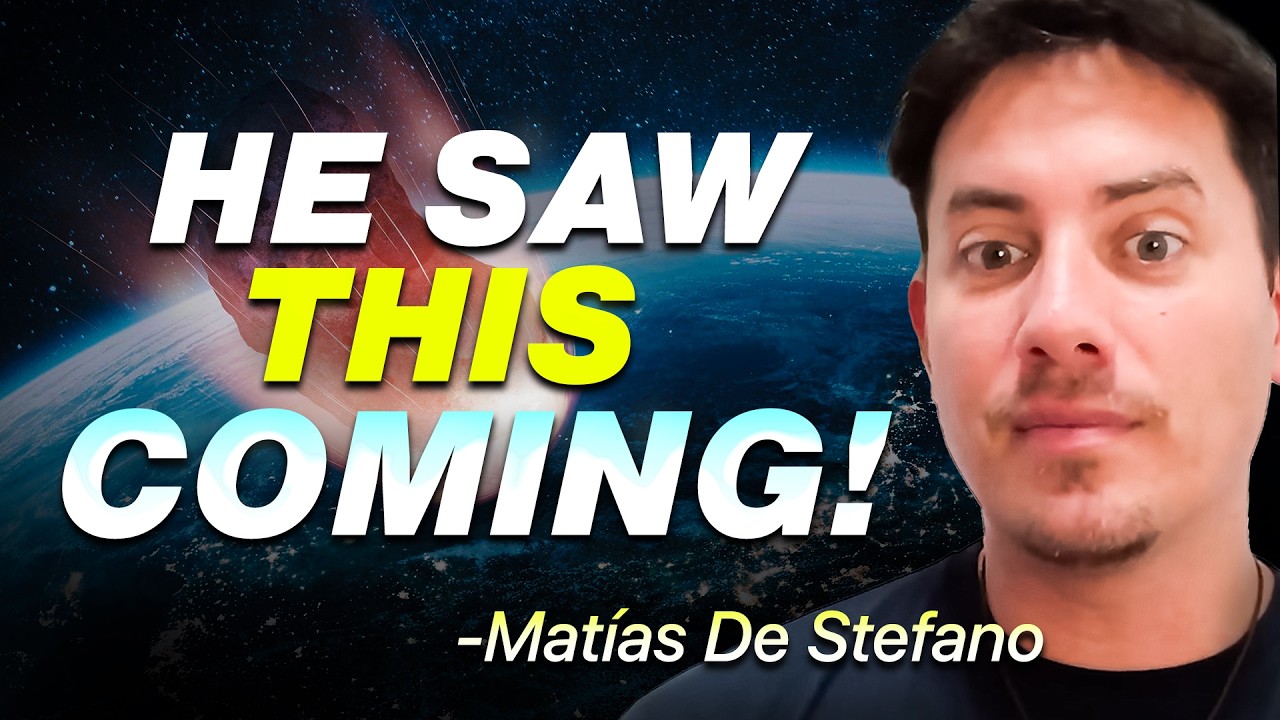
He believes in all of it. He just won't let you be sloppy about it.
Maybe it's true. Maybe it's not. See what resonates for you.
The shift of consciousness began approximately 200 years ago — in the 1890s. The greatest leap was in the 1940s-50s following World War II. We are living the result right now. Waiting for a utopian event that is always “coming soon” is, Matias says, its own kind of religious projection. Stop waiting for it. You’re already in it.
The longest and largest total solar eclipse of the century occurs in August 2027 directly above Luxor, Egypt. This is independently confirmed by NASA and astronomical authorities. Matias is building a three-year alchemical preparation program around this event. This is one of three scientific claims in this episode that Maybe has independently verified.
Asteroid Apophis will pass closer to Earth than geostationary satellites on April 13, 2029 — the closest asteroid approach of this size in recorded history. Originally calculated as a possible impact, revised to a near miss. Confirmed by NASA. Matias named this before the wider public conversation caught up.
Earth’s magnetic north pole has been moving west to east at an accelerating rate. Navigation systems globally had to recalibrate as a result. This is confirmed by mainstream science. Matias’s interpretation — that it affects human consciousness and perception — is his own framework, not the scientific consensus.
“We are not evolved enough for them to lose time with us. We are still triggered by things we don’t know how to handle in our own life.” This was said one month after Bashar’s 2027 contact prediction aired. It directly contradicts Bashar, Sara Landon’s Council, and the broader 2027 contact narrative. Maybe is tracking all positions through 2027.
Three independently confirmable scientific claims in one episode is exceptional in this space — the 2027 Egypt eclipse, Apophis 2029, and the magnetic north pole shift are all confirmed by NASA and mainstream science. That track record is why Maybe weights his contradiction of the 2027 contact narrative seriously.
His claim that "we are not evolved enough" for contact is not a falsifiable scientific statement — it's a judgment call about human consciousness. But it comes from a voice who has earned credibility through specificity elsewhere, which makes it worth sitting with.
Matias is also the only voice in the Maybe library who pushes back on the community's own optimism. That intellectual honesty — from inside the space, not outside it — is rare and valuable. Use your discernment.
These claims are tracked over time on the Claims board. Statuses reflect only this episode — not the source's full body of work.
Said in this episode but not promoted to a tracked claim with its own deadline — noted here so nothing gets lost, in case it matters later.
Matias directly contradicts Bashar and Sara Landon's Council on 2027 contact — one month after Bashar's prediction aired, he said flatly: "We are not evolved enough for them to lose time with us." His three NASA-confirmed claims give that contradiction real weight. He also converges with Lee Harris and Robert Edward Grant on a key pattern: the shift is a process unfolding over centuries, not a single coming event.