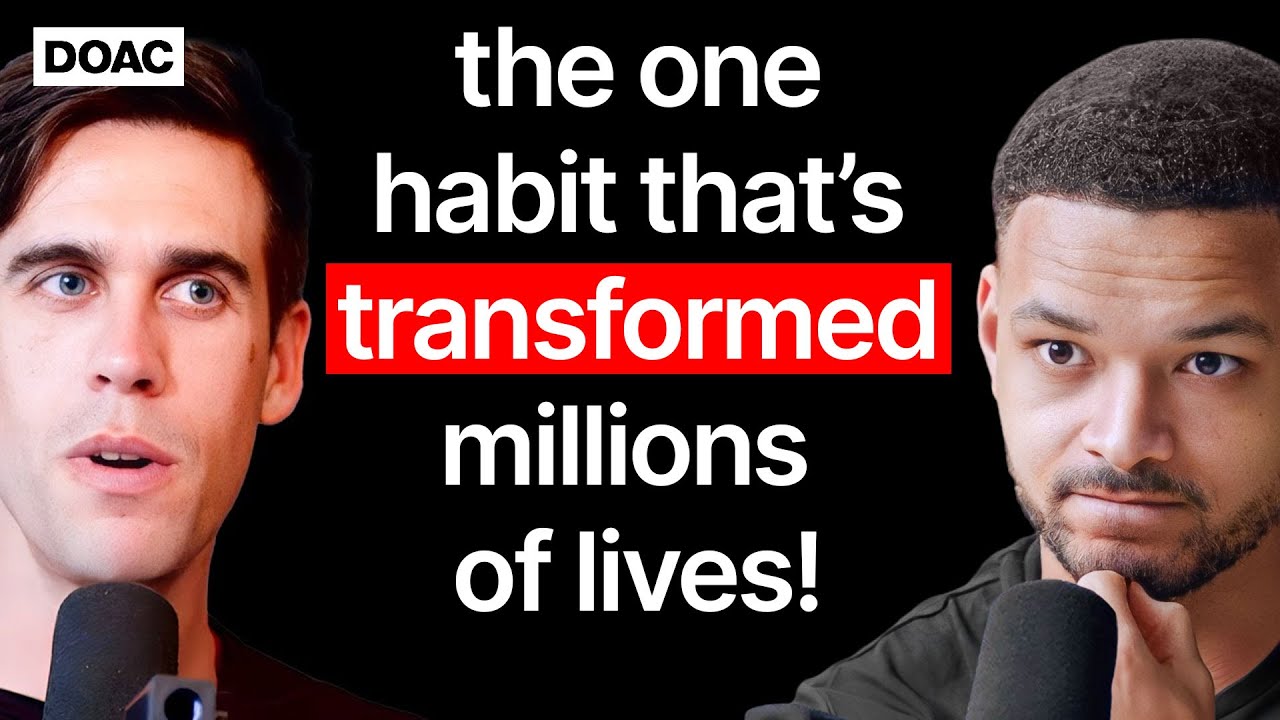
What if the most useful ideas about how to live your life were written by a man who buried six of his children — and still had to remind himself not to waste time?
Maybe it's true. Maybe it's not. See what resonates for you.
Epictetus was a slave in Nero’s court — no legal rights, no possessions, no freedom by any conventional measure. And yet he looked at the most powerful people in Rome and realized he was freer than all of them. Why? Because they were slaves to their ambition, their reputation, their next achievement. He wasn’t. True freedom, the Stoics argued, isn’t about what you can do — it’s about whether you’re in command of yourself. Discipline doesn’t take your freedom away. It’s how you get it back.
There’s a line from Cormac McCarthy’s The Road that Ryan returns to often: “If you break the little promises, you’ll break the big ones.” Every time you hit snooze when you said you wouldn’t. Every time you skip the thing you said you’d do. You’re not just missing a workout — you’re building the muscle that says “I can’t be counted on.” The reverse is also true. Every kept promise, no matter how small, is a vote for the person you’re becoming.
It’s very hard to be emotionally disciplined when you’re not taking care of yourself physically. Ryan runs, swims, or bikes every day — not to set records, not to train for anything, but to make a promise to himself and keep it. The Stoics had a phrase for it: a strong mind and a strong body. You can’t separate them. Whatever is happening in your work, your relationships, your finances — your physical baseline determines how well you handle it.
Marcus Aurelius tattooed this idea on Ryan’s arm — metaphorically. The impediment to action advances action. What stands in the way becomes the way. When something goes wrong — and it will — the Stoic question isn’t “why is this happening to me?” It’s “what does this make possible?” Not because hardship is secretly wonderful. Because the room is on fire and the only useful question is how you get yourself and everyone else out.
This is the one. Across every religious and philosophical tradition in human history, there is some version of this practice: remember you are mortal. Ryan’s version is direct — the second you were born, the doctor knew with certainty that you would die. You just don’t know when. Marcus Aurelius buried six children and still had to write notes to himself: don’t procrastinate, don’t think you have forever, don’t take this for granted. If the most powerful man in the world needed that reminder, so do you. The practice isn’t morbid. It’s clarifying. Time is moving. What are you doing with it?
Ryan Holiday is not a guru and doesn't want to be. He is a translator — someone who has spent fifteen years making 2,000-year-old ideas accessible to people who would never pick up a philosophy textbook. His entry point is practical, not mystical. He points away from himself and toward the original texts — Meditations by Marcus Aurelius, Enchiridion by Epictetus — consistently and deliberately. If this episode resonates, those books are the next step. Maybe notes that Holiday's version of Stoicism is streamlined for modern audiences; the original texts carry more weight, more complexity, and more difficulty. Both are worth your time.
Said in this episode but not promoted to a tracked claim with its own deadline — noted here so nothing gets lost, in case it matters later.
Connects with Sadhguru and Robert Greene — all three approach mortality and self-knowledge from completely different angles, arriving at similar conclusions about urgency and presence. Connects with Dispenza and Braden — "how you perceive things is how things go" is the thread running through neuroscience, ancient wisdom, and Stoic philosophy alike. Connects with Lee Harris and Matias De Stefano — "the obstacle is the way" and "the shift is a process, not an event" are the same idea in different languages.